What changed, who is affected, and how to stay compliant on every Riyadh site
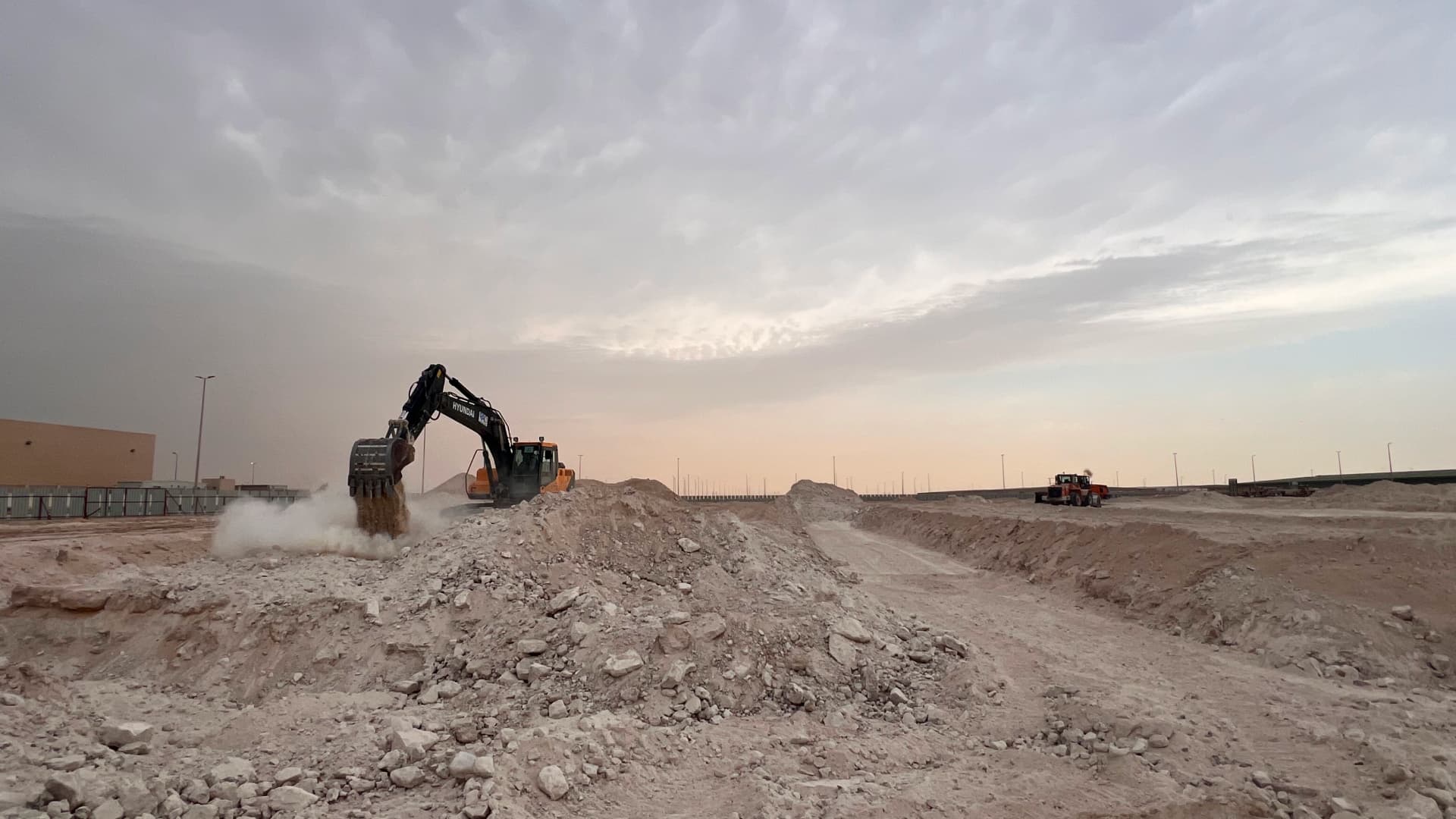
In early 2026, Riyadh moved decisively on a problem that has shadowed every construction season for years: airborne dust from active sites. Under new requirements aligned with the Royal Commission for Riyadh City, large construction projects are now expected to use approved dust suppression materials, monitor on-site air quality in real time, and treat exposed surfaces on a documented schedule.
For contractors and developers, the shift is more than an environmental upgrade. It is a procurement, scheduling, and supplier-selection issue that needs to be planned for from day one of mobilization.
This guide breaks down what is reportedly required, who needs to comply, and the most practical path forward for projects across the Kingdom.
Why Riyadh tightened its dust rules
Saudi Arabia's dust control market is forecast to grow from roughly USD 160 million in 2024 to over USD 230 million by 2033, driven mostly by construction activity. Riyadh sits at the center of that growth, with mega-projects, residential expansion, and infrastructure upgrades running concurrently.
The drivers behind the new rules:
- Air quality and public health. Construction dust is one of the largest contributors to urban PM10 and PM2.5 spikes.
- Vision 2030 alignment. Cleaner construction practices are baked into the Kingdom's environmental targets.
- Hosting credibility. Saudi Arabia hosted UNCCD COP16 in Riyadh in late 2024, putting national focus on sand, dust, and land degradation.
- Site safety. Dust drift across roads and adjacent sites is a documented safety hazard, particularly during peak wind season.
What the regulation reportedly requires
Based on public commentary from Riyadh-based QS, planning, and HSE professionals, projects above a defined size threshold are now expected to:
- Use approved dust suppression materials rather than relying on water alone.
- Treat exposed surfaces on a regular, documented schedule, including stockpiles, haul roads, and large open work areas.
- Install on-site air quality monitoring, with real-time PM readings during active works.
- Maintain a Dust Management Plan covering sources, controls, monitoring, and corrective action.
Reported applicability threshold: projects of approximately 2,000 m² and above. Contractors should confirm the exact threshold with the Royal Commission for Riyadh City before tender submission.
Why water alone no longer cuts it
Water has been the default dust control tool in Saudi construction for decades. The problem is well documented:
- Water evaporates rapidly in KSA's heat and wind.
- Continuous re-spraying eats into water budgets that are increasingly scrutinized.
- Treated surfaces revert to dust generators within hours.
- Peer-reviewed data shows water-only roads generate up to 3.4 times more dust than polymer-treated equivalents.
Water still has a role, but it is no longer a defensible standalone strategy under the new regulatory framing.
What an approved dust suppressant looks like in practice
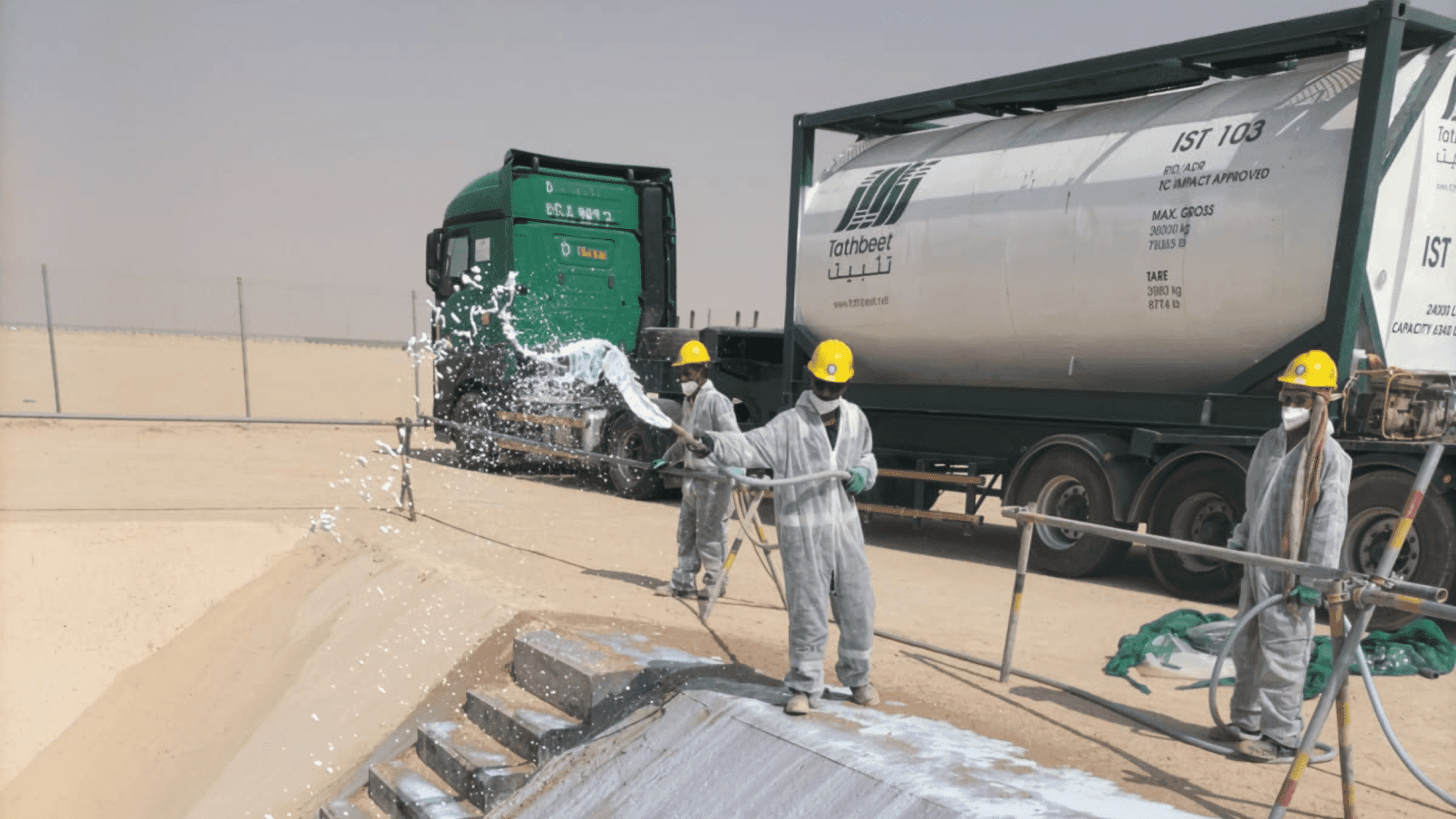
Approved suppressants are typically chemical or polymer-based products that bind soil particles into a stable, weather-resistant surface crust. The right product depends on the application:
- Stockpiles and laydown areas: light-application polymer to lock the surface.
- Haul roads and access roads: heavy-duty polymer with load-bearing performance.
- Slopes and berms: polymer for erosion and dust together.
- Open desert and large work zones: broadcast polymer over wide areas with minimal equipment.
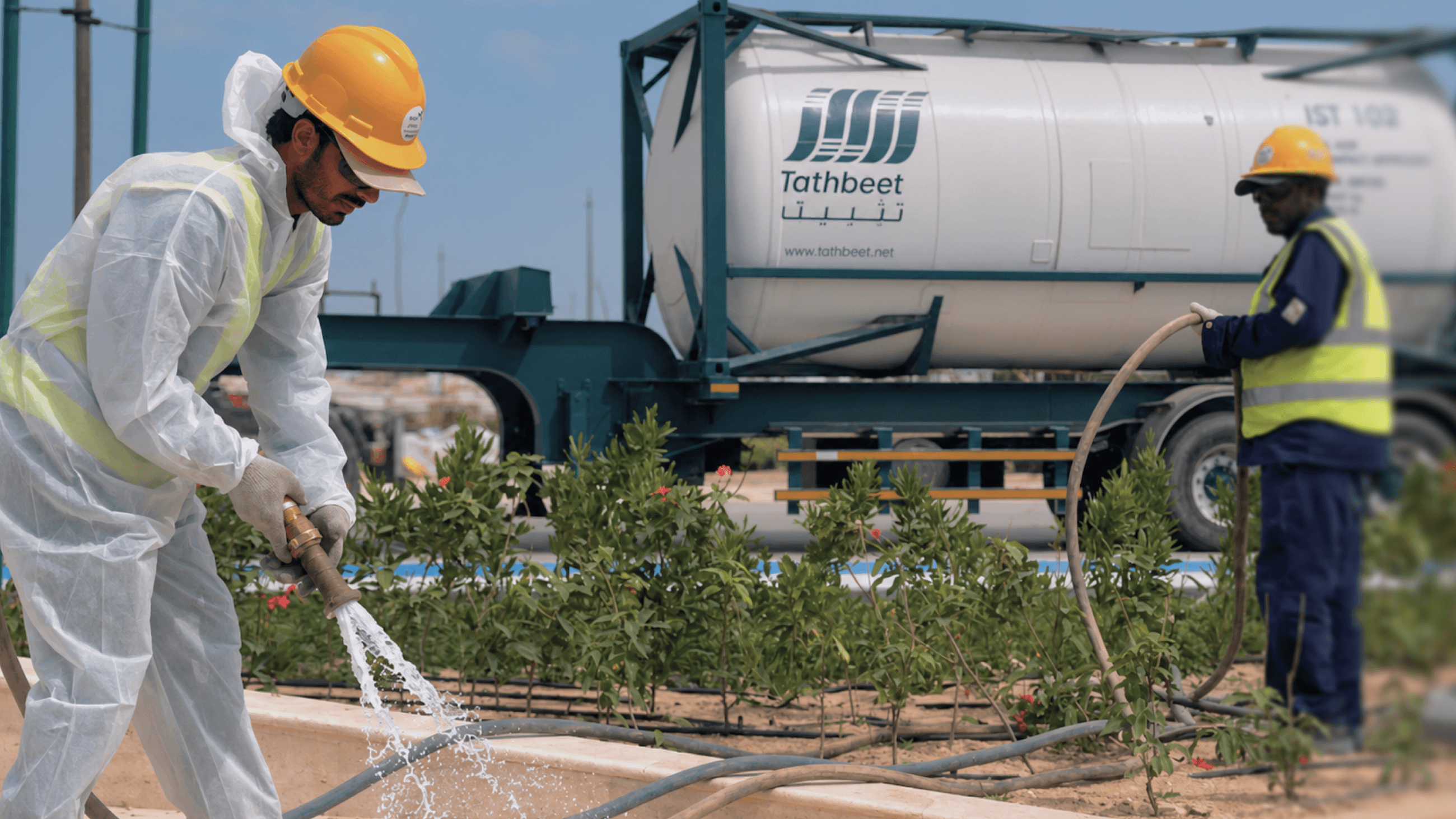
Tathbeet's T-30 and T-70 polymers are engineered for these exact use cases and have been deployed across Aramco, Sela, and major Saudi infrastructure projects.
A practical compliance checklist for Riyadh projects
Use this as a pre-mobilization checklist:
- Confirm project area and applicability with RCRC requirements.
- Identify dust sources: stockpiles, haul roads, exposed earthworks, demolition zones.
- Select an approved suppressant for each source category.
- Set a treatment schedule and assign responsibility.
- Install on-site air quality monitoring and define alert thresholds.
- Draft and submit a Dust Management Plan with the project HSE pack.
- Train site supervisors on inspection and corrective action.
- Document treatments and air readings for audit.
Where polymer stabilization fits in
Polymer-based stabilization is one of the simplest paths to compliance because a single application can cover dust suppression, surface stabilization, and erosion control at the same time. Specifically:
- One application can last weeks to months, reducing labor and water costs.
- No daily re-spraying required, freeing up site water trucks.
- Wide coverage with minimal equipment, suited to large Riyadh sites.
- Documented performance, useful evidence for compliance audits.
For projects already operating under ISO 14001 environmental management, polymer suppressants align cleanly with documented water-saving targets.
Frequently asked questions
- When did Riyadh's new dust rules come into effect? Public reporting indicates the rules were officially adopted in early 2026. Contractors should confirm enforcement dates with the Royal Commission for Riyadh City.
- Does the regulation apply to small residential projects? Reported coverage focuses on projects of approximately 2,000 m² and above. Smaller projects should still follow standard dust management practice, but mandatory compliance appears to target larger sites.
- What happens if a project is non-compliant? Reported enforcement options include warnings, fines, and stop-work orders. Confirm enforcement specifics with RCRC.
- Is water spraying still allowed? Yes, but it is generally not sufficient on its own. The regulation reportedly expects approved suppressants and air monitoring, not water alone.
- Where can I source an approved dust suppressant in KSA? Tathbeet supplies and applies T-30 and T-70 polymer suppressants for sand stabilization, dust control, and erosion protection across the Kingdom. Talk to our team to scope a site-specific solution.
Build a compliant Riyadh site from day one
Compliance is easier when it is engineered into mobilization, not retrofitted under an inspection deadline. Tathbeet's polymer solutions are already protecting major sites across Saudi Arabia and meet the kind of documented, certified, and repeatable standards Riyadh's new rules expect.
Talk to our team about your next Riyadh project: tathbeet.net | +966 13 847 5550