Introduction: The Ground Beneath Saudi Arabia's Ambitions
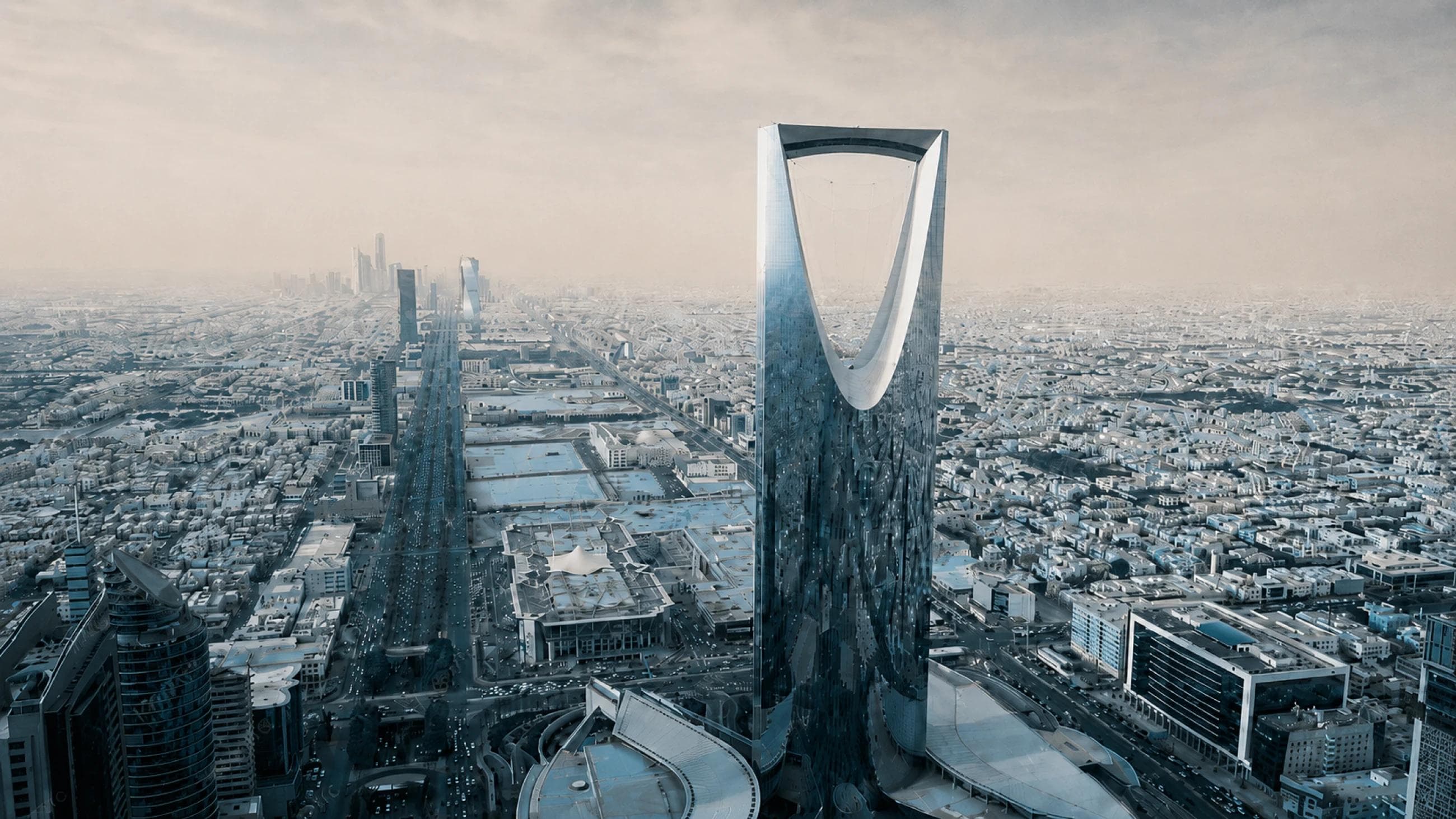
Saudi Arabia is building at a scale the world has rarely seen. From giga-projects reshaping entire coastlines to highways cutting through vast desert terrain, the foundation of it all, quite literally, is the ground. And in a country dominated by shifting sands and arid conditions, that ground requires serious attention.
Effective sand stabilization isn't a luxury in Saudi Arabia. It is a fundamental requirement for any infrastructure project that needs to last. But not all stabilization methods are created equal. As the Kingdom accelerates toward Vision 2030, understanding the difference between traditional approaches and modern polymer solutions can mean the difference between a project that holds up for decades and one that demands constant, costly maintenance.
This blog explores the landscape of sand stabilization methods in the Kingdom: where they came from, how they work, and crucially, where they fall short.
Traditional Sand Stabilization Methods in Saudi Arabia
Before advanced polymer technologies became available, construction and infrastructure teams in Saudi Arabia relied on a handful of tried-and-tested (if imperfect) approaches. Each has its place, but each also carries limitations that become especially pronounced in KSA's extreme conditions.
1. Mechanical Compaction
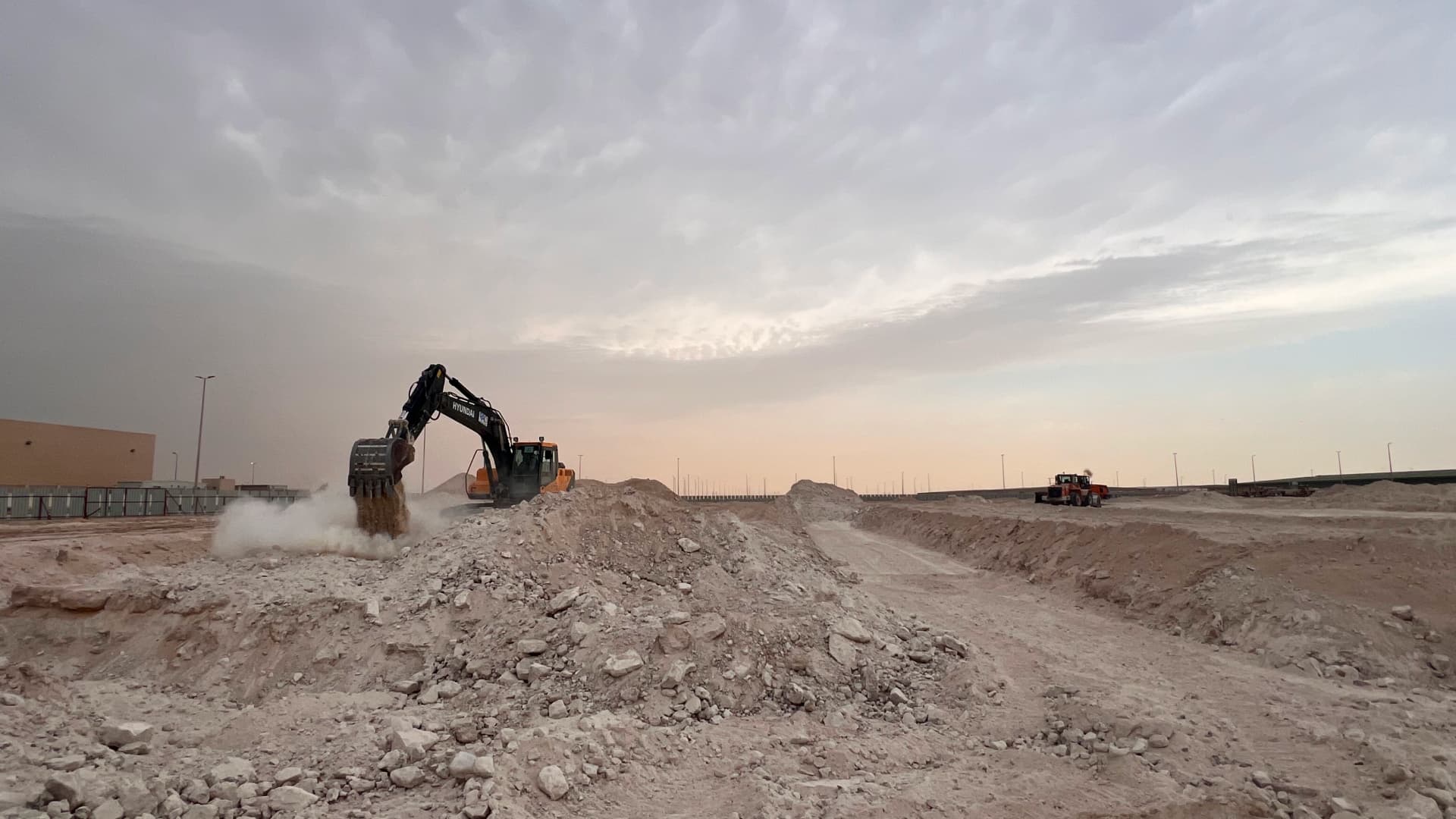
One of the most widely used methods, mechanical compaction uses heavy machinery (rollers, compactors, and graders) to compress loose sand and increase its density and bearing capacity.
Where it works: Effective as a preparatory step for road bases and building foundations, particularly when combined with other methods.
Where it falls short: In loose, fine desert sands, compaction alone provides limited cohesion. Without a binder, the surface remains vulnerable to erosion from wind and water, and can quickly return to its original loose state under traffic or environmental stress.
2. Continuous Watering
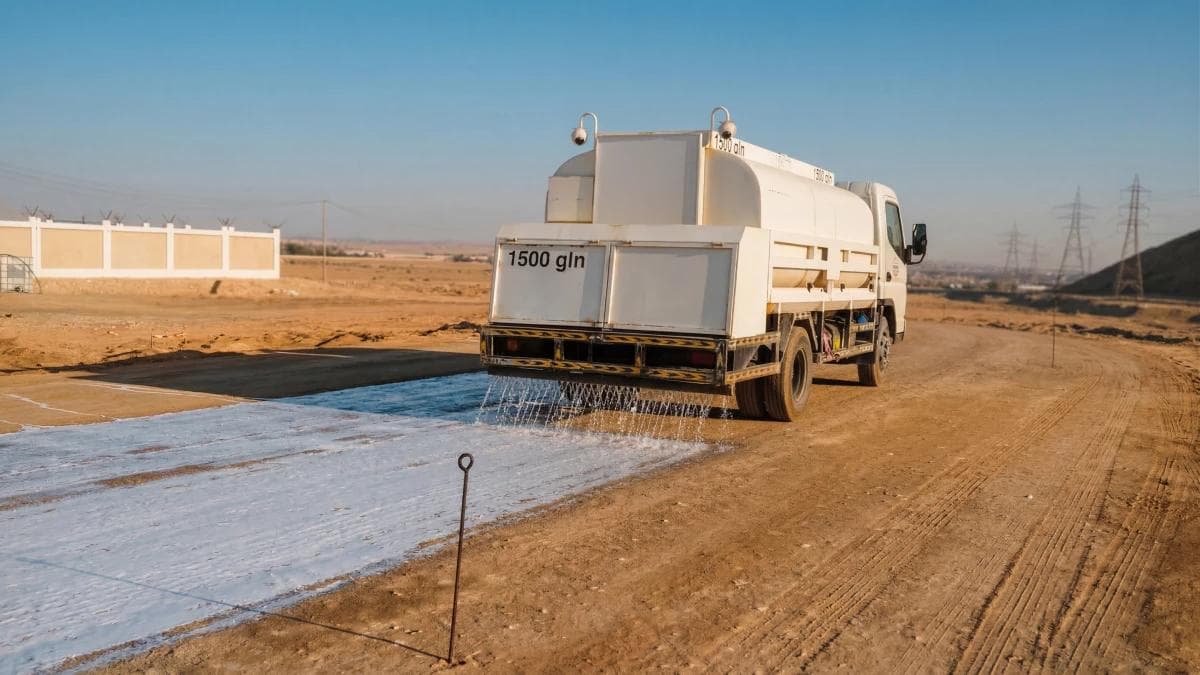
Watering is one of the oldest dust control and stabilization measures on construction sites. Tanker trucks periodically spray water onto exposed surfaces to suppress dust and provide temporary cohesion.
Where it works: Simple, immediate, and requires no specialized equipment.
Where it falls short: In Saudi Arabia's climate, water evaporates rapidly, sometimes within hours. This method demands constant repetition, consuming enormous volumes of water and driving up operational costs. It offers no structural improvement and does nothing to address erosion. In a country managing water scarcity as a national priority, this approach is increasingly untenable.
3. Addition of Aggregates
Mixing coarser materials (gravel, crushed stone, or sand-gravel blends) into existing sandy soils can improve load-bearing capacity and reduce permeability.
Where it works: Can be effective for road sub-base preparation and areas requiring improved drainage characteristics.
Where it falls short: Sourcing and transporting aggregate materials across Saudi Arabia's vast geography is expensive and logistically complex. Results vary significantly depending on aggregate quality and soil type. Surface erosion and dust remain issues without additional treatment.
4. Chemical Stabilizers: Cement and Lime
Adding binding agents such as Portland cement or lime to soil creates a chemically stabilized layer with significantly improved strength. These are widely used globally in road construction.
Where it works: Delivers high compressive strength, making it suitable for road bases and foundations with heavy structural loads.
Where it falls short: Cement-stabilized soil is rigid and brittle, prone to cracking under thermal expansion and contraction, which is extreme in Saudi Arabia's climate. It is not flexible, meaning it cannot absorb the slight ground movements common in sandy environments. Cement production is also highly carbon-intensive, and lime treatment can alter soil chemistry in ways that are difficult to reverse. Application requires careful mixing, water, and extended curing times.
Why Traditional Methods Are No Longer Enough
The common thread across these approaches is a fundamental mismatch: they were developed for different climates, different soil profiles, and a different era of construction. Saudi Arabia's environment is uniquely demanding:
- Extreme heat accelerates evaporation and degrades binders not designed for UV and temperature resistance.
- Fine, cohesionless sands lack the particle interlocking that traditional compaction and aggregates rely on.
- Wind-driven erosion continuously undoes surface work not chemically bonded.
- Water scarcity makes any water-intensive method environmentally and economically unsustainable.
- Project scale demands fast, wide-area solutions that minimize mobilization and logistical complexity.
Vision 2030's ambitious construction program has made these limitations impossible to ignore. When a giga-project needs stable ground across hundreds of kilometers of desert, watering trucks and cement batching simply don't scale. Not sustainably, and not economically.
The Shift Toward Modern Polymer Solutions
This is where polymer-based soil and sand stabilization has emerged as the defining advancement for KSA's construction sector. Rather than compressing, diluting, or rigidly binding soil, polymer technology works with the natural characteristics of sandy ground, coating individual soil particles and forming flexible, durable bonds that hold without cracking, without constant water, and without heavy logistics.
The result is a stabilized surface that:
- Resists wind and water erosion
- Supports load-bearing traffic and infrastructure
- Conserves water and aligns with KSA's sustainability goals
- Can be applied rapidly over large areas
- Remains eco-friendly, non-toxic and safe for the surrounding environment
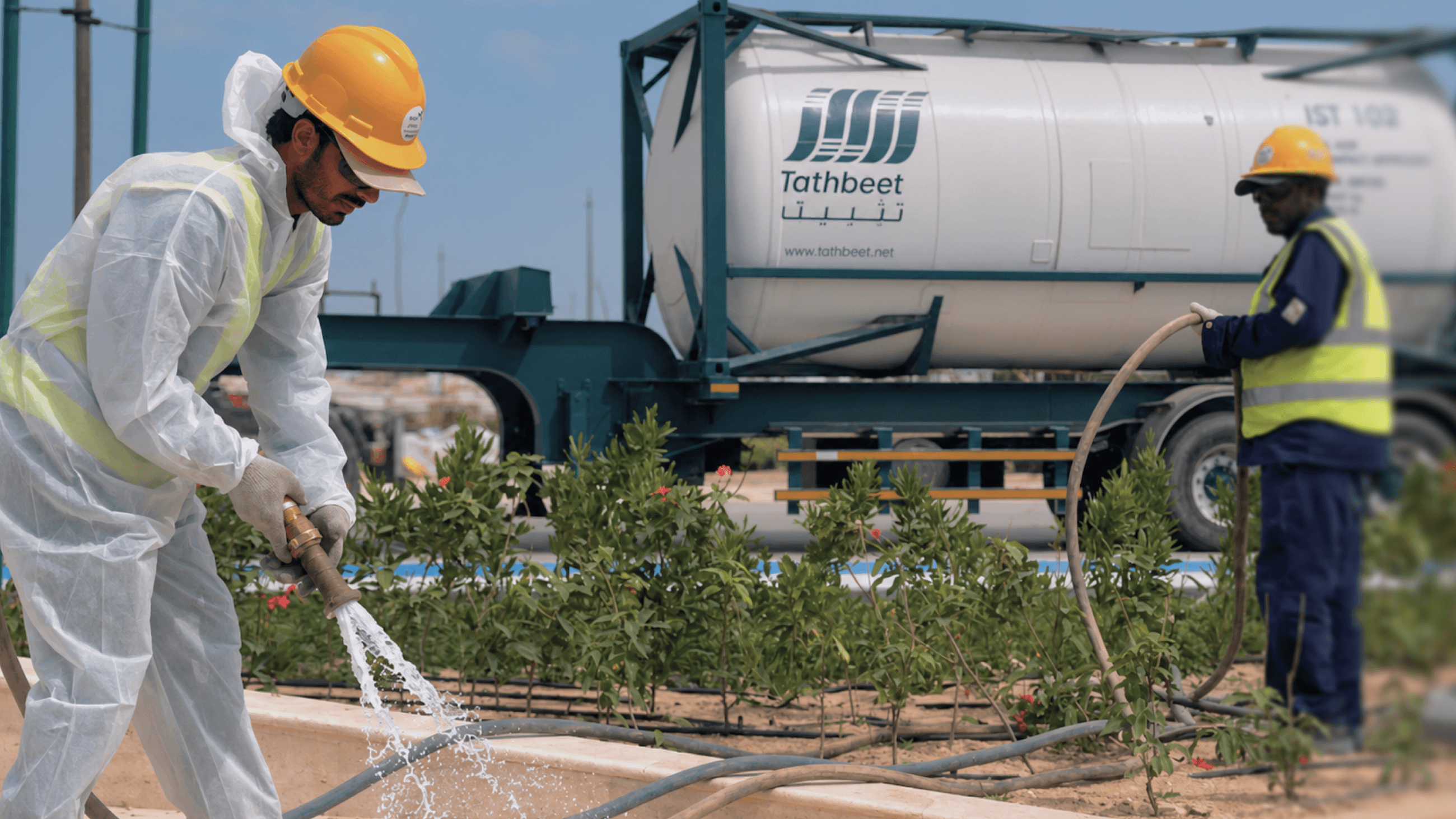
At Tathbeet, this technology takes the form of two purpose-engineered polymer products, T-30 and T-70, each designed for specific applications and load requirements across Saudi Arabia's most demanding sites.
Conclusion
Saudi Arabia's ambitions demand materials and methods at the frontier of what's possible. Traditional stabilization techniques served their purpose, but the scale, climate, and environmental context of modern Saudi construction has simply outgrown them.
Understanding why these methods fall short is the first step to making smarter, more durable decisions for your projects.