9 min read
Construction Dust Control in Riyadh: A 2026 Compliance Guide
A practical guide to Riyadh’s construction dust requirements, including planning, monitoring, haul roads, truck controls, and choosing appropriate suppression methods.
Read Blog
20
/ 100
A practical guide to asphalt alternatives in Saudi Arabia, comparing gravel, concrete, pavers, cement-treated soil, and polymer-stabilized roads for different sites and loads.
If you are planning an access road, industrial yard, parking area, or remote project route in Saudi Arabia, you may be asking a practical question: does this surface really need asphalt?
Sometimes the answer is yes. Asphalt remains the right choice for many permanent, high-speed, and heavily trafficked roads. But it is not the only engineered option. Gravel, concrete, pavers, cement-treated soil, and polymer-stabilized soil can all serve specific applications when the ground, traffic, drainage, and service life are properly assessed.
The key is not to find one material that replaces asphalt everywhere. It is to choose the surface system that fits the job. This guide breaks down the main asphalt alternatives in Saudi Arabia, where each one works, where it falls short, and when a polymer road may make sense.
An asphalt alternative is any engineered surface or pavement system used instead of a conventional asphalt wearing course. The term can include simple compacted aggregate, rigid concrete, modular pavers, chemically treated soil, or local soil improved with a polymer binder.
These options are not interchangeable. A temporary construction route has different needs from a public highway. An industrial yard used by loaded trucks has different demands from a landscaped park path. The correct choice starts with the purpose of the surface, not with the material name.
| Option | Where it works | Where it falls short |
|---|---|---|
| Compacted gravel | Temporary access, light traffic, suitable local aggregate | Dust, rutting, loose material, and frequent grading |
| Concrete | Heavy static loads, loading zones, permanent industrial areas | Higher cost, slower work, rigid cracking, and difficult repairs |
| Interlock or pavers | Parking, pedestrian areas, landscaped developments | Labor intensive and dependent on a well-prepared base |
| Cement or lime-treated soil | Compatible soils requiring rigid improvement | Suitability varies by soil, with mixing, water, curing, and cracking considerations |
| Polymer-stabilized soil | Access roads, yards, remote routes, dust control, and selected traffic-bearing surfaces | Requires soil testing, correct dosage, compaction, curing, and a site-specific design |
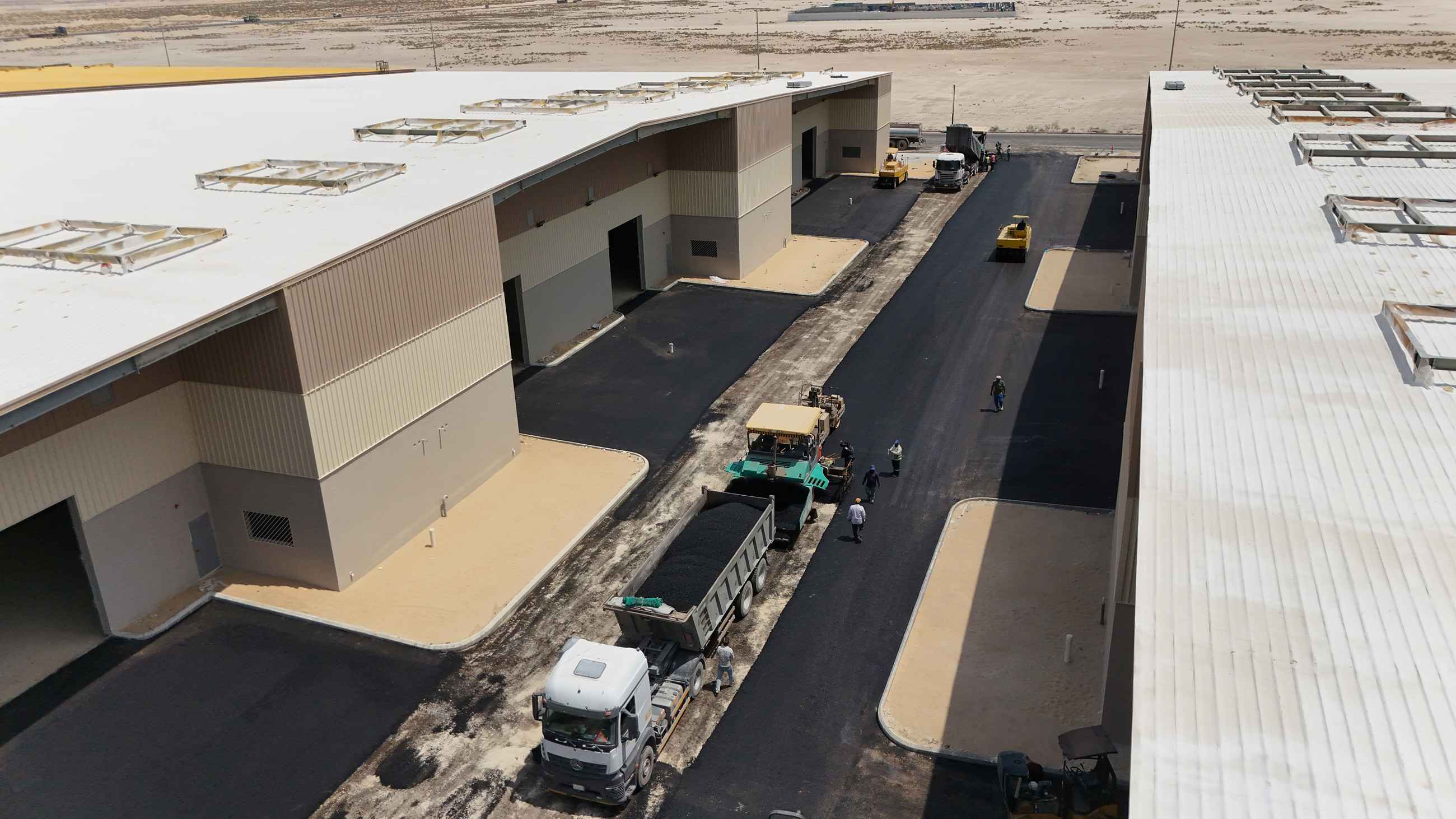
| Asphalt | Public roads, high-speed traffic, and established pavement specifications | Material transport, paving logistics, heat, and full pavement construction can be excessive for some internal uses |
The best option is the one that meets the required performance without adding unnecessary construction, transport, or maintenance.
Gravel is familiar, fast to place, and often economical at the start. It can work for short-term access or light traffic when suitable material is available nearby.
Its weakness is maintenance. Traffic can displace aggregate and remove fine particles, creating dust, corrugation, potholes, and rutting. Remote sites may also face a high transport cost if quality aggregate must be imported.
Concrete is useful where you need a rigid surface for heavy static loads, repeated braking, loading bays, or long-term industrial use. It can offer strong performance when properly designed and constructed.
However, it needs careful jointing, curing, and subgrade preparation. It is usually more than you need for a temporary route, light-duty yard, or large low-speed area.
Pavers can be a good fit for parking areas, pedestrian routes, landscaped sites, and locations where appearance matters. Individual units can also be lifted for utility access and reinstated.
The base still carries the load. Poor preparation can lead to settlement, unevenness, and movement, so pavers are not a shortcut around proper ground engineering.
Cement and lime can improve compatible soils by increasing strength and controlling certain soil behaviors. These methods are well established, but their success depends on soil chemistry, mixing quality, moisture, curing, and the required performance.
The result is comparatively rigid. That can be useful in some designs, but it also means cracking and repair need to be considered under thermal movement and repeated loading. See how traditional and modern stabilization methods compare.
Polymer stabilization binds soil particles into a more cohesive layer. Depending on the formulation and application method, it can improve bearing performance, reduce dust, resist erosion, and limit the loss of surface material.
The important word is engineered. Polymer is not simply sprayed on every road. Traffic-bearing surfaces normally require soil evaluation, controlled mixing, moisture management, compaction, and curing. Surface treatments and structural treatments also serve different purposes.
A polymer-stabilized surface can be considered when asphalt would add more construction than the project needs, especially for:
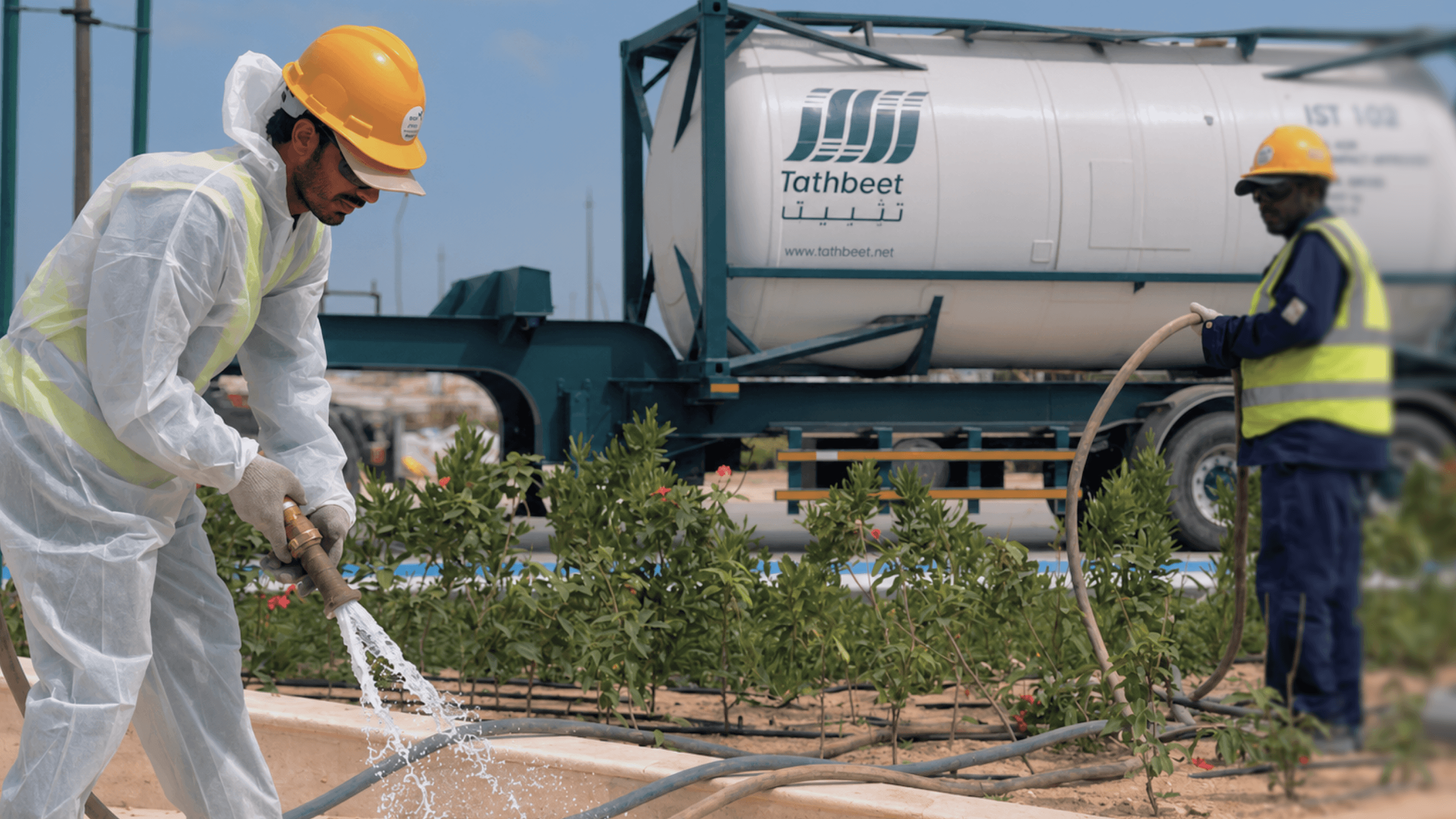
At Tathbeet, T-70 is mixed into soil for traffic-bearing applications that require greater density, strength, and weather resistance. T-30 is spray applied for surface binding, sand movement, dust control, slopes, berms, and exposed areas with limited traffic.
A single project may use both. T-70 can strengthen the road or working area, while T-30 can protect shoulders and surrounding sand. The design still needs drainage, correct geometry, compaction, and quality control.
Polymer stabilization should not be presented as a universal replacement for asphalt. Asphalt may remain the better choice when the project involves:
Saudi Arabia's Road Code provides a unified technical reference for road authorities across the Kingdom. Any public or regulated road should follow the applicable authority, pavement design, testing, and approval requirements.
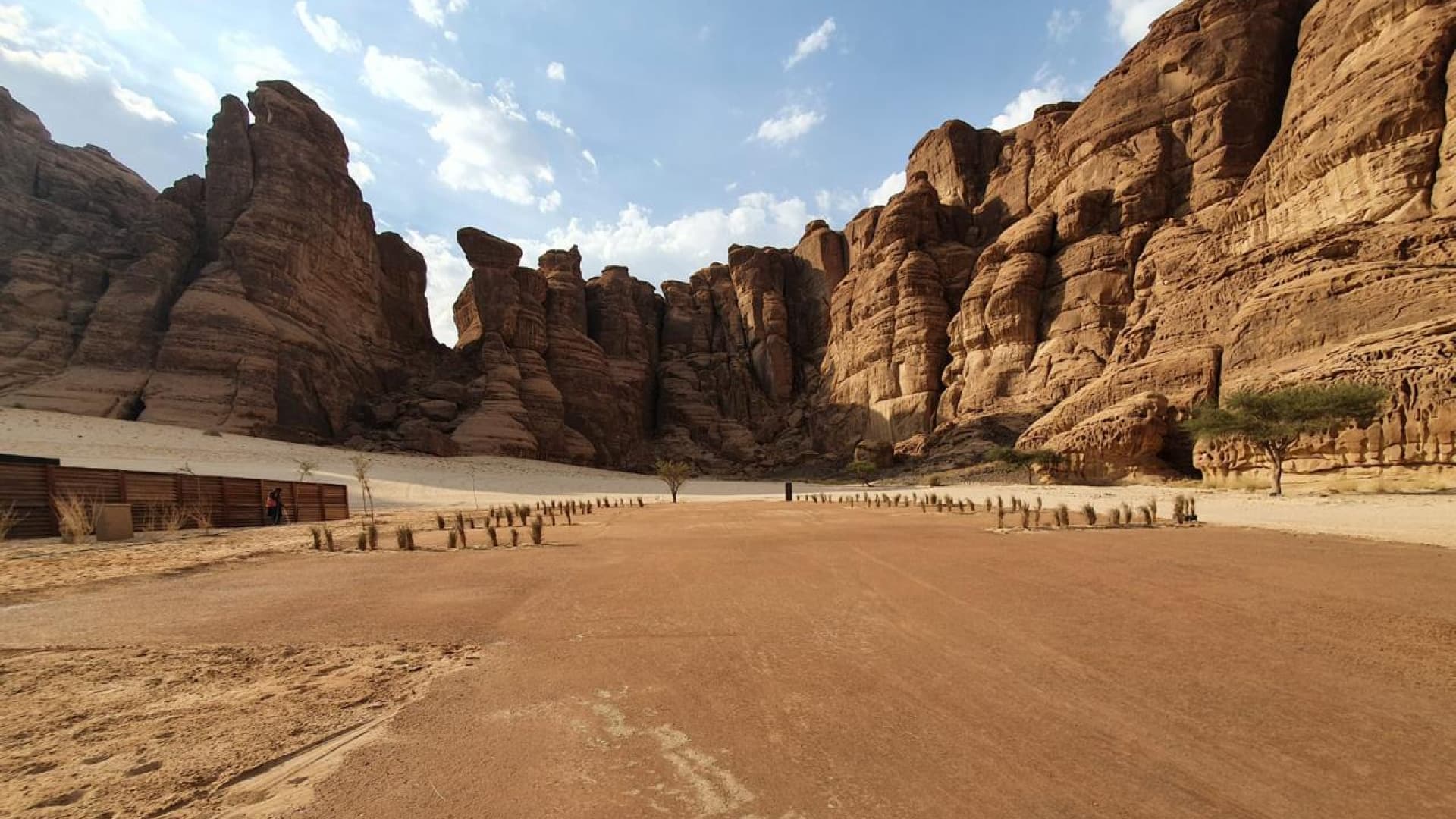
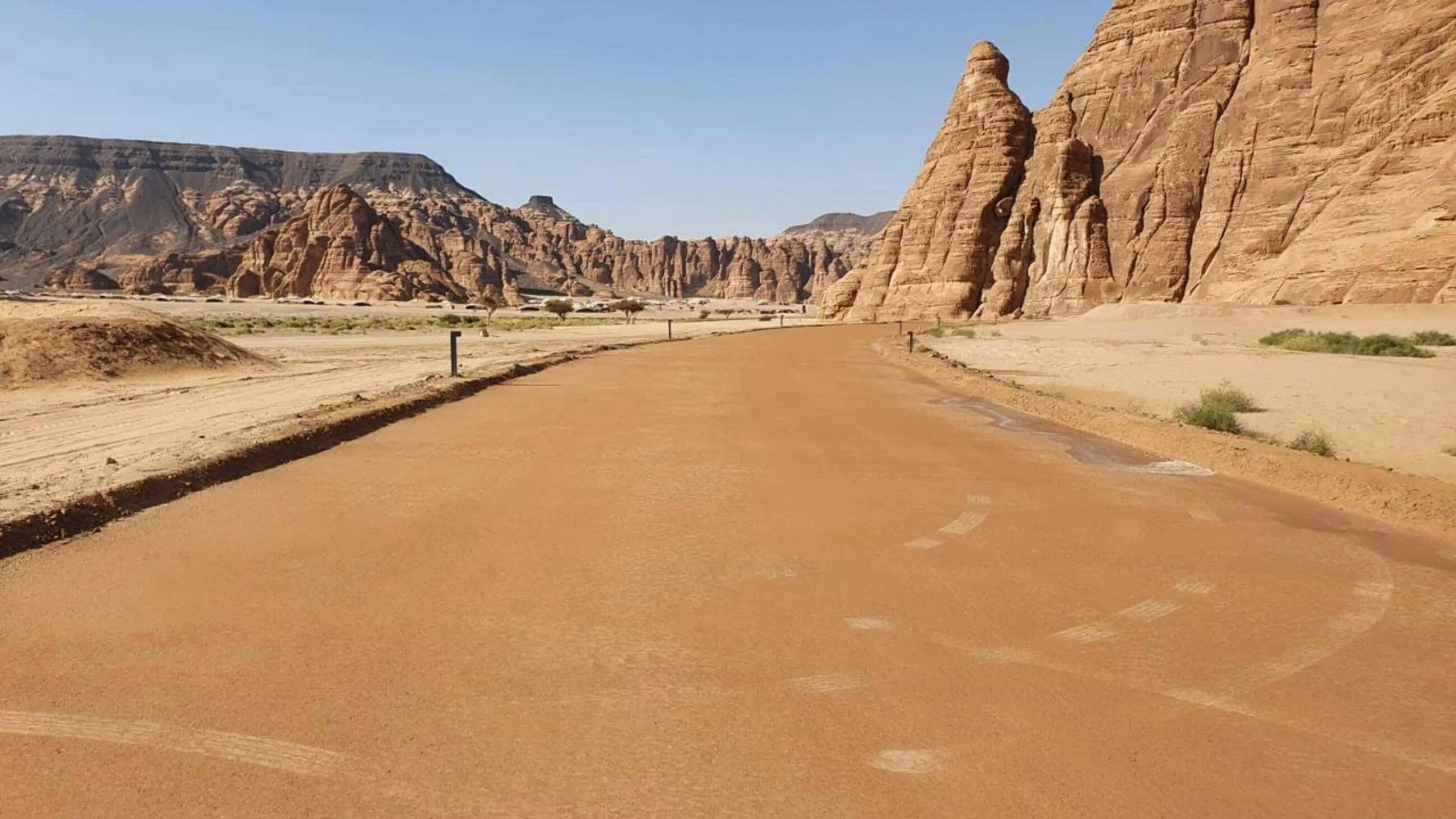
Tathbeet used T-70 polymer technology on an AlUla road project in 2022. According to Tathbeet's published project record, the treatment increased the road surface California Bearing Ratio by 340 percent and improved subgrade strength.
California Bearing Ratio, or CBR, is a test used to indicate how well a soil or pavement material resists penetration under load. The result does not mean every site will achieve the same improvement. It shows why project-specific testing matters before a treatment is selected.
View the AlUla Road Construction project
Start with the surface's actual job. Define whether the route is temporary or permanent, which vehicles will use it, the heaviest expected loads, daily traffic frequency, and the required service life. A lightly used construction route should not be designed like a permanent industrial road, and a heavy logistics yard should not be specified like a parking area.
Next, test the soil and identify weak or variable areas. The results help determine the required bearing performance, treatment depth, and construction method. Drainage must be designed at the same time, including crossfall, shoulders, and water crossings, because no surface material can compensate for water trapped by poor geometry.
Finally, compare the complete lifecycle rather than the opening-day material price. Include imported materials, mobilization, dust control, maintenance, grading, repairs, and operational downtime. Where performance still needs validation, a trial section can confirm the proposed design before it is applied across the full site.
This approach avoids two expensive mistakes: overbuilding a surface that does not need asphalt, or underbuilding a route that cannot handle its actual traffic.
It can be, particularly on large internal areas or remote sites where aggregate transport and paving logistics are significant. The answer depends on soil, traffic, treatment depth, preparation, and maintenance. Compare lifecycle cost using a site-specific design and quotation, and see our soil stabilization pricing guide.
Yes, if the soil, treatment depth, polymer dosage, compaction, and curing are designed for the expected axle loads and traffic frequency. A surface treatment intended mainly for dust control should not be treated as a structural road layer.
There is no responsible universal lifespan. Performance depends on soil compatibility, traffic, drainage, construction quality, climate exposure, and maintenance. Ask for testing, a trial section where appropriate, and a clear performance basis for the proposed system.
Only if the relevant authority and project specification allow it. Public roads should be designed and approved under the applicable Saudi requirements. Polymer can also be used to improve a base or subgrade without replacing the final asphalt surface.
T-30 is spray applied for surface stabilization, dust control, erosion protection, slopes, berms, and moving sand. T-70 is mixed into the soil where the treated layer needs greater structural strength and resistance to vehicle traffic. Read the full T-30 and T-70 guide.
The right asphalt alternative is not the cheapest material on a list. It is the system that matches your soil, traffic, drainage, construction schedule, and required service life.
Tathbeet can assess your site and determine whether the project needs asphalt, a T-70 traffic-bearing layer, T-30 surface protection, or a combined approach.
Discuss your project with Tathbeet: tathbeet.net/contact | +966 13 847 5550
Explore Tathbeet’s latest blog posts & content

Work with Us

Tathbeet's exclusive CRM for construction: Manage projects, invoices, and clients seamlessly.
SoftStationCopyright © 2024 Tathbeet - All Rights Reserved.
Designed & developed by effekt.designSolutions
Projects