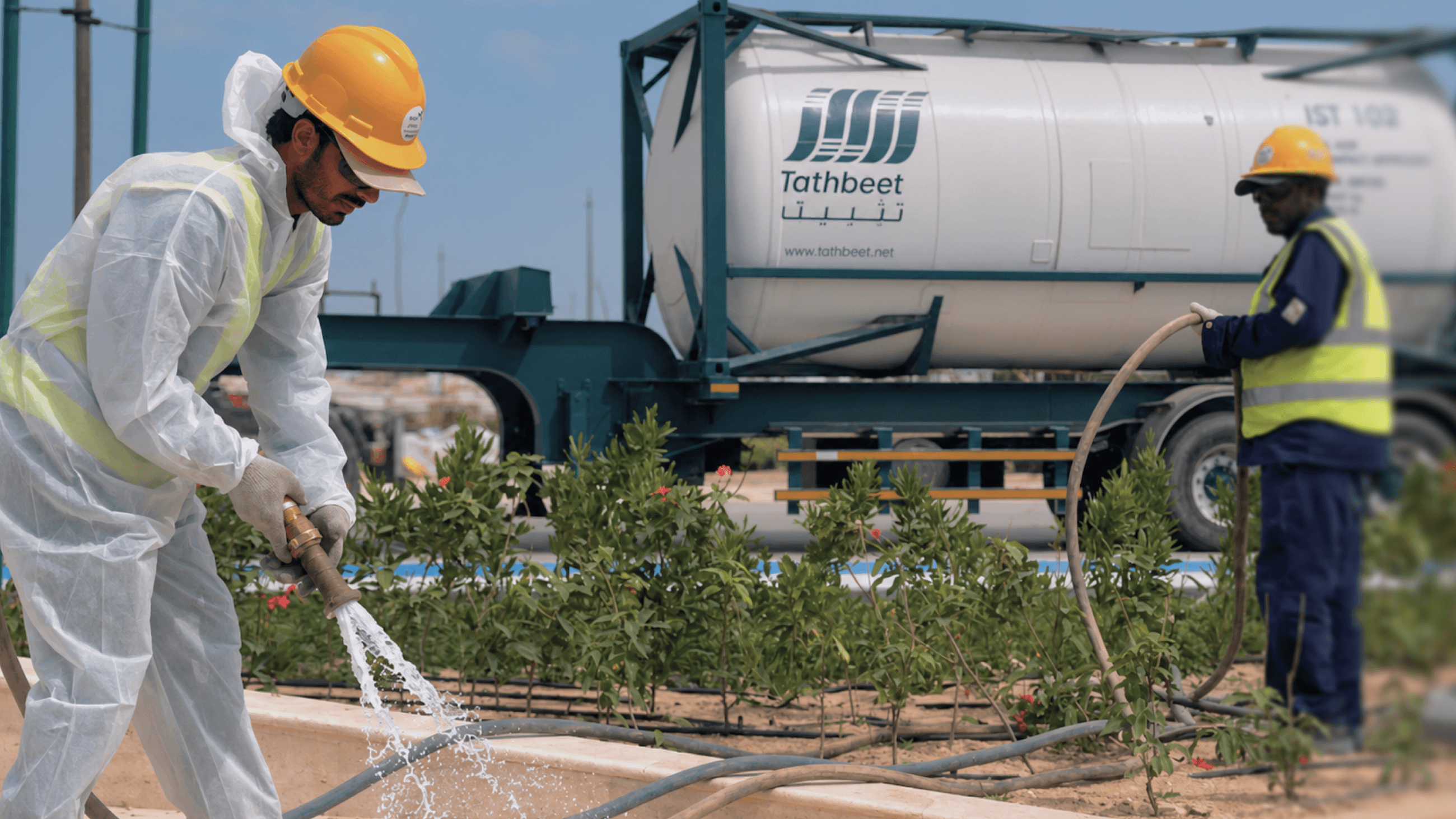
Construction dust in Riyadh is no longer treated as a minor housekeeping issue. It is now a monitored environmental and operational risk that developers and contractors need to manage from site preparation through active construction.
The Royal Commission for Riyadh City, the National Center for Environmental Compliance, and Riyadh Municipality introduced 11 requirements for controlling dust from construction activities. The framework applies to construction projects in Riyadh with a total area of 2,000 square metres or more. Recent inspections and continuous air-quality monitoring show that enforcement is active, not theoretical.
For project teams, this changes how dust control should be planned, specified, documented, and reviewed. This guide breaks down what contractors need to consider, which parts of a site create the most risk, and where water, operational controls, and dust suppressants fit.
Why construction dust control matters now
Riyadh is developing at a scale that places major construction activity close to homes, roads, schools, hospitals, and other sensitive areas. Dust that leaves a project boundary can affect visibility, air quality, neighbouring properties, and public health.
The new framework places greater responsibility on the project itself. Dust controls are expected to form part of mobilisation and daily site operations, rather than being introduced only after a complaint or inspection.
Current monitoring also goes beyond occasional site visits. Authorities use fixed and mobile air-quality stations, field inspections, and reports from nearby communities to identify sites and activities that need attention. Contractors therefore need a system that works consistently and can be documented.
Which projects need to pay attention?
The official requirements apply to construction projects in Riyadh covering 2,000 square metres or more. However, smaller sites can still generate dust, affect neighbouring properties, and face general environmental obligations.
The level of control should reflect the actual site risk. Important factors include:
- Project size: Larger exposed areas create more opportunities for loose soil to become airborne.
- Site activity: Excavation, grading, demolition, crushing, loading, and material handling generate different types of dust.
- Vehicle movement: Haul roads and site exits can carry loose material beyond the project boundary.
- Surrounding area: Sites close to homes, hospitals, schools, mosques, or busy roads require tighter controls.
- Weather: Dry conditions and strong winds can quickly turn an acceptable site into a high-risk one.
A project should not rely on its size alone. The dust-management approach needs to match the activities, ground conditions, traffic, and neighbouring environment.
What the Riyadh requirements cover
The official framework combines prevention, treatment, monitoring, and reporting. Key areas include the following.
Treating exposed soil and active work areas
Exposed ground should be managed so that excavation, grading, loading, and vehicle movement do not continuously release dust. Depending on the surface and activity, controls may include water, approved dust suppressants, compaction, temporary covering, or a combination of methods.
The correct method depends on how long the surface will remain exposed, whether vehicles will use it, and whether the area needs surface binding or structural strength.
Managing haul roads and site traffic
Vehicle movement is a major source of construction dust. Unpaved routes need regular treatment, while speeds should be controlled to reduce the amount of loose material lifted into the air.
The route itself should also be reviewed. A poorly located haul road can move dust toward a neighbouring community even when spraying is frequent.
Covering loads and controlling site exits
Trucks carrying soil, aggregate, or waste should be properly covered. Site teams also need to prevent material from being tracked onto surrounding roads.
Wheel-washing systems, controlled entry and exit points, road cleaning, and rapid removal of spilled material all help stop the problem from moving outside the site.
Monitoring air quality
Projects within the applicable scope may need on-site air-quality monitoring connected to Riyadh’s unified construction dust monitoring platform. Monitoring should not be treated as a reporting exercise alone. It should help the site team identify rising dust levels and respond before the issue becomes a larger problem.
A clear response process is essential. Site teams need to know which activities should be adjusted, slowed, or stopped when conditions deteriorate.
Documenting environmental performance
The framework also requires periodic environmental performance reporting. This means contractors need reliable records of treatments, inspections, monitoring results, maintenance, complaints, and corrective actions.
Without documentation, even a well-managed site can struggle to demonstrate that controls were applied consistently.
What a practical dust-management plan should include
A Dust Management Plan turns separate controls into one coordinated operating system. It should be prepared before major earthworks begin and updated as site conditions change.
A useful plan should define:
- The activities and areas most likely to generate dust
- Nearby communities and sensitive locations
- The control method assigned to each source
- Who is responsible for inspection and corrective action
- How air quality and weather conditions will be monitored
- How treatments and maintenance will be recorded
- What happens when controls fail or dust levels rise
- How complaints will be received, investigated, and closed
The plan should be specific to the site. Copying a generic document without mapping it to actual roads, stockpiles, work fronts, and neighbouring areas creates a document that is difficult to use during daily operations.
Water, polymer suppressants, and operational controls compared
No single method solves every source of dust. Most projects need a combination.
| Method | Where it works | Where it falls short |
|---|
| Water spraying | Short-term control during excavation, loading, and active work | Evaporates quickly and may require frequent reapplication in hot, dry conditions |
| Polymer dust suppressant | Exposed soil, selected haul roads, stockpiles, slopes, and areas needing longer surface binding | Requires correct product selection, soil assessment, application rate, and client approval |
| Compaction or temporary surfacing | Routes and working areas that need a firmer surface | May not suit every soil or temporary project phase |
| Covers and barriers | Stockpiles, loads, and defined dust sources | Does not treat dust generated by traffic or exposed ground |
| Operational controls | Speed limits, route planning, phased work, cleaning, and temporary suspension | Depends on consistent supervision and site discipline |
The best solution is source-specific. Water may be appropriate during an active excavation, while an exposed area that will remain unused for several weeks may need a longer-lasting surface treatment. A haul road carrying heavy equipment needs a different design from a non-traffic area beside a project boundary.
Where polymer stabilization can support compliance
Polymer stabilization binds soil particles together to reduce loose material at the surface. It can support dust management in areas where repeated water spraying is inefficient or where the site also needs erosion control or a more stable working surface.
Tathbeet uses two polymer systems for different requirements:
- T-30 is applied to the surface for sand stabilization, dust control, and erosion protection in suitable non-structural applications.
- T-70 is mixed into the soil where greater cohesion and load-bearing performance are required.
Product selection should follow a site and soil assessment. Contractors should also confirm project specifications, environmental requirements, approved materials, traffic conditions, and the expected service period before selecting any treatment.
Polymer treatment should not be presented as a replacement for every other requirement. Covered trucks, wheel washing, monitoring, documentation, and good site management remain necessary. The value of stabilization is that it can control dust at the ground source while supporting a wider site-management plan.
Questions to ask before selecting a dust-control supplier
Before procurement, ask:
- Has the supplier assessed the site, soil, traffic, and expected treatment period?
- Is the proposed material suitable for the specific source of dust?
- What preparation, equipment, application rate, and curing conditions are required?
- What documentation can be provided for the project’s environmental records?
- How will performance be inspected and maintained after application?
- Does the proposal cover only material supply, or assessment and application as well?
These questions help prevent a project from buying a product without confirming whether it matches the actual operating conditions.
Frequently asked questions
Which construction projects are covered by Riyadh’s dust-control requirements?
The official requirements apply to construction projects in Riyadh with a total area of 2,000 square metres or more. Smaller sites should still manage dust according to their environmental obligations and surrounding risks.
Is water spraying enough for construction dust control?
Water can provide effective short-term control during active work, but it evaporates quickly in hot and dry conditions. Longer exposure periods or high-traffic areas may need additional treatment and operational controls.
What is a Dust Management Plan?
It is a site-specific operating plan that identifies dust sources, affected areas, control methods, monitoring responsibilities, records, and corrective actions. It helps turn dust control into a consistent daily process.
Can polymers be used for dust control in Riyadh?
The official framework includes dust suppressants among the available controls. The selected product and application still need to match the project specification, soil, traffic, environmental requirements, and approval process.
Does dust monitoring replace physical dust controls?
No. Monitoring shows when conditions are changing, but the project still needs effective controls at the source. Treatment, traffic management, covering, cleaning, and corrective action work together with monitoring.
Build dust control into the project from day one
Dust compliance is easier when it is included in mobilisation, route planning, procurement, and daily reporting from the beginning. The right approach should control dust at its source while fitting the project’s soil, traffic, programme, and environmental responsibilities.
Discuss your site requirements with Tathbeet: tathbeet.net/contact | +966 13 847 5550